
This week Bernhard Law Firm won a 7-year battle over real estate in the historic Lincolnville neighborhood just below the Castillo de San Marcos National Monument in St. Augustine, Florida. The Court adopted Bernhard Law Firm’s reasoning that:
Plaintiffs improperly sought to reopen matters half-a-century old and turn the laws of real estate on their head. Under Plaintiffs’ legal theories, the Court would be fielding cases from the first human habitation of Florida. Florida law does not let real estate sit in limbo in perpetuity. Investors, buyers, sellers, and all Floridians must have certainty in their purchases and investments, to better and preserve real estate, and to conduct normal business activity.
CA22-0268 (11/27/23 Final Judgment).
[CONTINUE READING BELOW PHOTO]

The battle stretched between the reopening of a probate case and a new civil lawsuit for ejectment and partition of real property, that arose from the death of a prior owner 50 years ago. Bernhard Law Firm represented the current owner of the real estate, who had purchased the property over 20 years ago. Bernhard Law Firm first won re-closure of the probate case, after Bernhard Law Firm successfully revoked and struck letters of administration, vacated the self-appointment of a petitioner as personal representative of the decedent, and forced retraction of a petition to sell the property against the current owner’s will. Bernhard Law Firm then won objections to a civil petition to determine heirs and dismissal of the civil lawsuit for ejectment of the owner and partition of his property. See St. John’s County civil case no. CA22-0268 and probate case no. CP01-04. If you have questions about probate litigation, real estate litigation, or St. Augustine civil litigation, please contact Bernhard Law Firm at www.bernhardlawfirm.com, 786-871-3349, abernhard@bernhardlawfirm.com.
The Lawsuit for Ejectment and Partition of Real Estate
As garnered from the Court’s recent order and filings, the civil case arose under a complaint for ejectment and partition of real estate at on Kings Ferry Way, St. Augustine Florida. The record shows Bernhard Law Firm’s client bought this property 23 years ago, 52 years after the decedent’s death. Under the record, Plaintiffs’ own Amended Complaint and exhibits,[1] the property is held in title by Bernhard Law Firm’s client alone. Plaintiffs’ exhibits showed that they are not the owner of the property, conflicting with their allegation that Plaintiffs “are owner of the real property,” and thus Plaintiffs failed to state a cause of action for ejectment under Florida Statutes § 66.021(1).[2] Plaintiffs’ Complaint and exhibits showed that Plaintiffs’ claims were not superior to that of Bernhard Law Firm’s client in any way, as required to state a cause of action under Florida Statutes § 66.021(1). Plaintiffs’ own chain of title and exhibits to the Complaint showed that Bernhard Law Firm’s client is a 22-year bona fide third-party purchaser whose right is superior to Plaintiffs’ claims.[3]
Bernhard Law Firm Won on the Statute of Repose and Adverse Possession
The Court agreed with Bernhard Law Firm that the Complaint was time-barred on its face by the statute of limitations, statute of repose, statute of adverse possession, the bona fide purchaser doctrine, the res judicata doctrine, lack of standing due to lack of title, and laches. §§ 95.14,[4] 95.16,[5] 95.21,[6] 95.22,[7] 95.231,[8] Fla. Stat. (2000) and (2022); Elsman v. HSBC Bank USA, 182 So. 3d 770, 771–72 (Fla. 5th DCA 2015) (plaintiff failed to show by substantial competent evidence that it had standing to file the complaint); Khan v. Bank of Am., N.A., 58 So. 3d 927, 928 (Fla. 5th DCA 2011) (exhibits control complaint, and showed plaintiff lacked standing to maintain lawsuit); Johnson v. Johnson, 385 So. 2d 610, 612 (Fla. 4th DCA 1980) (husband had no standing to support partition action where he had no right to immediate possession of the property); Richardson v. Richardson, 315 So. 2d 513, 513 (Fla. 4th DCA 1975) (wife had no standing for partition without possession or title after divorce).
The Court agreed with Bernhard Law Firm that the Plaintiffs failed to adequately address all of the statutes of limitations, repose, and adverse possession. The Court held that Plaintiffs’ argument that no statute of limitations or repose exists for ejectment and partition claims was unfounded and wrong. Plaintiffs signed the deed and received proceeds from the sale23 years ago. The statutes of repose and limitations had unquestionably run. See, e.g., Florida Statutes § 95.231(2)–(3) (“After 20 years from the recording of a deed or the probate of a will purporting to convey property, no person shall assert any claim to the property against the claimants under the deed or will or the successors in title. This law is cumulative to all laws on the subject matter.”).
Likewise, the Court agreed with Bernhard Law Firm that the Complaint, Amended Complaint, and their exhibits showed that Plaintiffs were not seized or possessed of the real property within 7 years (2015) before commencement of this lawsuit (2022), as required under § 95.14, Fla. Stat (2023) (“Real property actions; limitation upon action founded upon title. No cause of action . . . founded on the title to real property, or to rents or service from it, shall be maintained unless: (1) The person prosecuting the action . . . or the ancestor, predecessor, or grantor of the person, was seized or possessed of the real property within 7 years before commencement of the action.”). On the face of the Complaint, Plaintiffs were not seized or possessed of this real estate from 2015 to now (or ever), and thus the limitations period has run. This lawsuit is time-barred.
Bernhard Law Firm Won on the Probate Statute of Limitations
Further, the Court agreed with Bernhard Law Firm that on the face of the Complaint, Amended Complaint, and their exhibits, Plaintiffs are barred by the three-year statute of limitations for land purchased at the administration sale of the decedent in 2000, under § 95.21, Fla. Stat (2023) (“The title of any purchaser, or the purchaser’s assigns, who has held possession for 3 years of any real or personal property purchased at a sale made by an executor, administrator, or guardian shall not be questioned because of any irregularity in the conveyance or any insufficiency or irregularity in the court proceedings authorizing the sale, whether jurisdictional or not, nor shall it be questions because the sale was made without court approval or confirmation . . . The title shall not be questioned at any time by anyone who has received the money to which he or she was entitled from the sale. This section shall not bar an action for fraud or an action against the executor, administrator, or guardian for personal liability to any heir, distribute, or ward.”). Again, the Court held that Plaintiffs’ claims are time-barred as Bernhard Law Firm’s client purchased this property at an executor/administrator’s sale in 2000, and far more than the 3-year limitations period has run.
Additionally, the Court agreed with Bernhard Law Firm that Florida Statutes § 64.203 (cited by Plaintiffs as the basis for their motion to determine heirs property) expressly requires that “a partition action is otherwise available” as a condition precedent. Plaintiffs cannot show this statutory condition precedent under § 64.203, given the numerous legal and time bars to partition.
The Court agreed with Bernhard Law Firm that reading the statutes, the pleadings, and the pleading exhibits together, the result is clear. The statutes provided Plaintiffs the right sue their biological mother for her personal liability in cutting them out in 2000, if they could somehow overcome the fact that they received the sale proceeds and signed the deed in 2000, and other defenses and time-bars. However, Plaintiffs cannot sue Bernhard Law Firm’s client over 20 years later to take his duly purchased property.
Bernhard Law Firm Won on Res Judicata
Further, the Court agreed with Bernhard Law Firm that res judicata also barred this case. The Honorable Judge Traynor and the undersigned Honorable Judge Janesk had already ruled against the Plaintiffs’ attempts to change title to Bernhard Law Firm’s client’s property, to add themselves unilaterally to Bernhard Law Firm’s client’s title, or otherwise take his property 23 years later. See St. John’s County Case No. CP01-04, of which the Court must take judicial notice:
[JUDGE TRAYNOR]: [T]he reason I believe that it should be in civil, okay, is because you’re going to be dealing with a number of things in terms of that either rescission, voiding deed, whatever, and those are all things that are done by the civil division of the Circuit Court. . . .
If you’re planning a civil action . . . I don’t want you to hold off doing that because of waiting for me to decide what I’m doing. Okay?
[COUNSEL FOR PLAINTIFF]: Yes, Your Honor.
[JUDGE TRAYNOR]: I just want to make it clear that whatever I do in terms of the estate, I am not going to, as part of the estate, try to litigate things like rescission, things like quiet title, things like – you know, those things. I think those were more properly in the civil realm. . . .
Whether or not somebody’s a good faith purchaser or not is something I’m not going to decide at this time in this Court. I may never decide it in this Court.
Ruling August 12, 2016 in CP01-04.
[JUDGE JANESK]: [Bernhard Law Firm’s client’s] Motion to Vacate and Strike/Revoke Letters of Administration, Self-Appointment of [Petitioner] as Personal Representative, and Order Thereon (the “Motion”), and the Court having reviewed the record, heard argument of counsel, and been otherwise duly advised, it is hereby ORDERED AND ADJUDGED:
- [Bernhard Law Firm’s client’s] Motion is GRANTED.
- [Petitioner’s] Letters of Administration dated October 11, 2021 and filed October 12, 2021 are revoked and stricken.
- The Order Appointing [Petitioner] Personal Representative dated October 11, 2021 and filed October 12, 2021 is vacated and [Petitioner[ is removed.
- By agreement, [Petitioner’s] Petition to Sell [Bernhard Law Firm’s client’s] Property filed [by Petitioner] August 9, 2021 is withdrawn and stricken.
- This case is re-closed.
Ruling August 12, 2016 in CP01-04.
The Court agreed that this is res judicata. Judge Traynor admonished Plaintiffs in 2016 to not wait to file a civil action on this real estate. Plaintiffs ignored Judge Traynor, both in his order and admonishment, and instead waited until 2022 (22 years after the real estate transferred to Bernhard Law Firm’s client and 52 years after the decedent’s death) to file their claim to the property. They are time-barred.
[CONTINUE READING BELOW PHOTO]
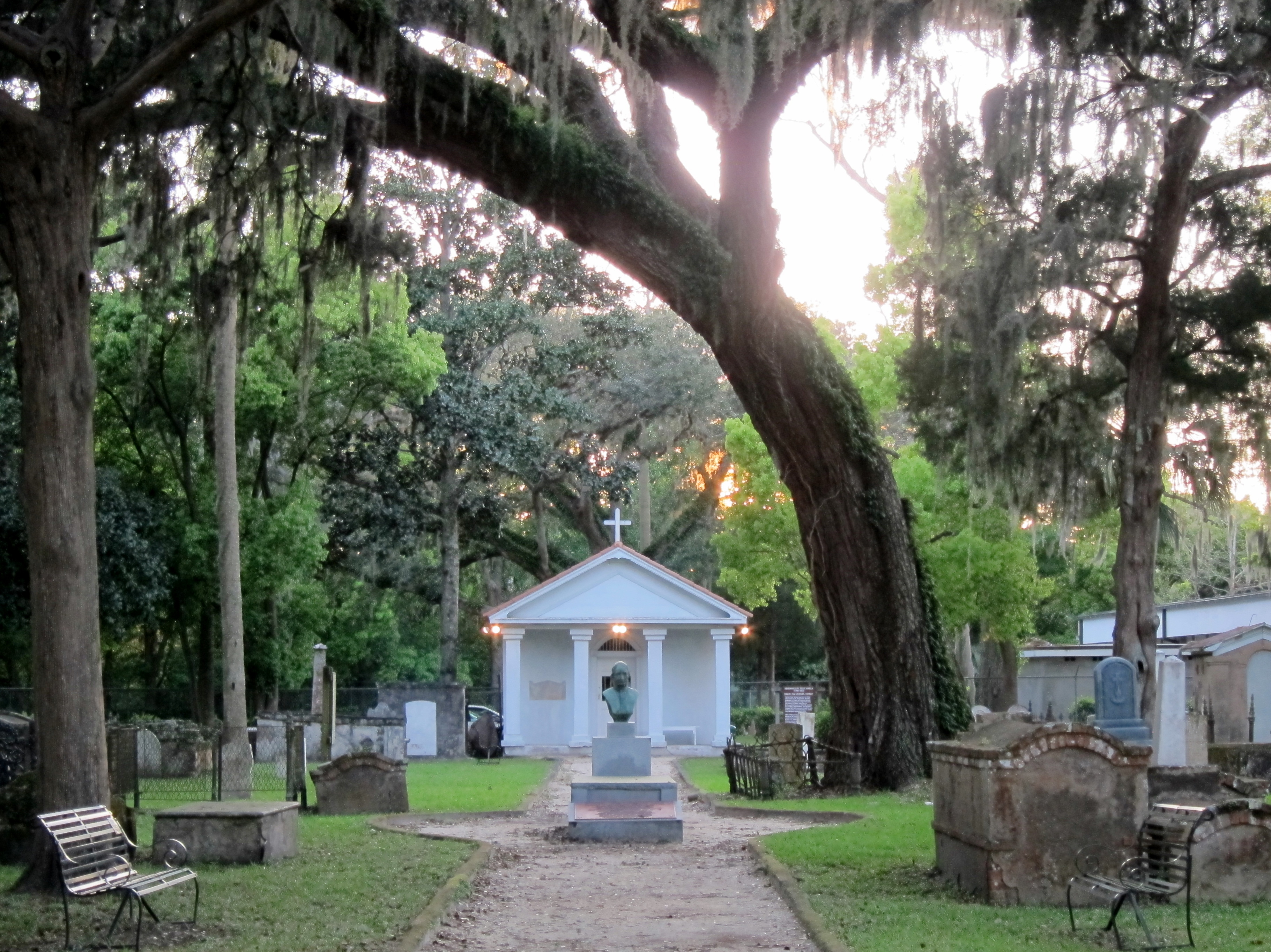
Photo by Roman Eugeniusz, St. Augustine.
Bernhard Law Firm Won Arguments Against Plaintiffs’ Case Law
The Court agreed with Bernhard Law Firm that Plaintiffs’ citations are insufficient to overcome the time-bar. Egger v. Egger, 506 So. 2d 1168, 1169 (Fla. 3d DCA 1987) is inapplicable, as it only holds that a quitclaim deed of a tenant-in-common in land is color of title only as to such interest as the person had at the time of deed. Here, the parties have warranty deeds that warrant and convey the whole of the property without limitation, and thus Egger is inapplicable. Further, the exception to § 95.22 cited only pertains to proceedings brought to determine heirs’ identities, which is not this case; and when the § 95.22 limitations period (7 years) had run here (2008), the only heirs whose names appeared in the probate proceedings were [not Petitioners’]. Plaintiffs’ names did not appear as heirs in any proceedings when the 7-year limitations period had run in 2008, and thus Egger and the exception do not apply. Thayer v. State, 335 So. 2d 815 (Fla. 1976) is entirely inapplicable, dealing with whether a restaurant licensing statute applies to special nonalcoholic licenses. Cook v. Rochford, 60 So. 2d 531 (Fla. 1952) is again inapplicable, as it discussed the effect of a quitclaim deed. There are no quitclaim deeds here. Reed v. Bachman, 61 W. Va. 452, an inapplicable, a copy of the opinion could not be located, and this case from West Virginia has no bearing on this Court. Christopher v. Mungen, 71 Fla. 545 (Fla. 1916) is inapplicable, as it discusses the effect of an 1899 act to legalize the marriages of offspring of slaves, and loosely discussed that adverse possession requires open and notorious possession. Florida Statutes § 733.101, provides that a decedent’s death is the event that vests the heirs’ right to the decedent’s intestate property. As such, all limitations periods ran from 1955 when the decedent died, and long ago expired. For these very reasons, Judge Traynor already held that he would not modify title, ownership, or summary administration 50 years later.
The Court agreed with Bernhard Law Firm that these citations and their concepts were directly addressed in the later opinion of Wheeling Dollar Bank v. City of Delray Beach, 639 So. 2d 113, 115 (Fla. 4th DCA 1994), which quoted and held:
[T]he court recognized this distinction and held that a non-possessing cotenant who is unaware of his interest in the property is in the same position as any other member of the public . . . Parties cannot thus, by their seclusion from the means of information, claim exemption from the laws that control human affairs, and set up a right to open up all the transactions of the past. The world must move on, and those who claim an interest in persons or things, must be charged with knowledge of their status and condition, and of the vicissitudes to which they are subject.
Plaintiffs improperly sought to reopen matters half-a-century old and turn the laws of real estate on their head. Under Plaintiffs’ legal theories, the Court would be fielding cases from the first human habitation of Florida. Florida law does not let real estate sit in limbo in perpetuity. Investors, buyers, sellers, and all Floridians must have certainty in their purchases and investments, to better and preserve real estate, and to conduct normal business activity. These dispositive failures cannot be cured on amendment, and thus amendment is futile.
Wheeling at 115.
Under these rulings, the Court dismissed the case permanently with prejudice. This was a complete win for Bernhard Law Firm’s client. If you have questions about probate litigation, real estate litigation, or St. Augustine civil litigation, please contact Bernhard Law Firm at www.bernhardlawfirm.com, 786-871-3349, abernhard@bernhardlawfirm.com.

[1] Khan v. Bank of Am., N.A., 58 So. 3d 927, 928 (Fla. 5th DCA 2011) (exhibits control complaint, and showed plaintiff lacked standing to maintain lawsuit).
[2] Where a document on which the plaintiff relies in the Complaint directly conflicts with the allegations of the Complaint, the variance is fatal and the Complaint is subject to dismissal for failure to state a cause of action. Appel v. Lexington Ins. Co., 29 So. 3d 377, 379 (Fla. 5th DCA 2010) (affirming dismissal where exhibits conflicted with allegations of complaint). A plaintiff failure to properly plead ejectment subjects his complaint to dismissal. Pro-Art Dental Lab, Inc. v. V-Strategic Group, LLC, 986 So. 2d 1244, 1252–54 (Fla. 2008). To state a cause of action for ejectment, the plaintiff must provide that: (1) he has title to the land; 92) he has been wrongfully dispossess or ousted; and (3) he has suffered damages. Silva v. de la Noval, 307 So. 3d 131, 135 n.2 (Fla. 3d DCA 2020) (citing Partridge v. Partridge, 940 So. 2d 611, 612 n.2 (Fla. 4th DCA 2006)).
[3] See Rivas v. Shiu Tsang, 299 So. 3d 522, 523–24 (Fla. 5th DCA 2020) (affirming judgment in favor of bona fide purchaser, over plaintiff former owner’s claims of fraud and forged power of attorney). The Court took judicial notice that Plaintiffs’ own allegations and exhibits showed, on their face, that Bernhard Law Firm’s client would also be an adverse possessor under color of title, entitled to ownership of the property. § 95.16, Fla. Stat. (2021).
[4] § 95.14, Fla. Stat. (2000) (“No cause of action [] founded on the title to real property, or to rents or service from it, shall be maintained unless the person prosecution the action . . . was seized or possessed of the real property within 7 years before commencement of the action”).
[5] § 95.16, Fla. Stat. (2000) (adverse possession under color of title accruing at deed recording).
[6] § 95.21, Fla. Stat. (2000) (“The title of any purchaser, or the purchaser’s assigns, who has held possession for 3 years of any real or personal property purchased at a sale made by an executor, administrator, or guardian shall not be questioned because of any irregularity in the conveyance or any insufficiency or irregularity in the court proceedings authorizing the sale, whether jurisdictional or not, nor shall it be questioned because the sale is made without approval or confirmation or under will or codicil. The title shall not be questioned at any time by anyone who has received the money to which he or she was entitled from the sale.”).
[7] § 95.22, Fla. Stat. (2000) (7-year time-bar to claims by remaining heirs after conveyance of property by heir or devisee).
[8] § 95.231, Fla. Stat. (2000) (5-year limitations period from the “recording of a deed or the probate of a will,” after which a deed is held good, and 20-year statute of repose).
 Fraud Lawyers Florida on Consumer Fraud